Friday, December 28, 2007

Hog Wild


"Woooooooooo, Pig! Sooie!"

- President William Jefferson Clinton (at University of Arkansas sporting events)

Similar to the grains (corn, soybeans, and wheat) discussed in the previous post, the Lean Hog contracts are very liquid and have high seasonal correlation from year to year, as do the Live Cattle contracts. Almost every year, the April contracts for both Lean Hogs and Live Cattle soar in price beginning in late-December or early-January, following dramatic plunges in price immediately prior to Christmas. Right on schedule, both hogs and heifers plunged in price this fall and early-winter, and I made some good money earlier this year shorting the hogs.

While published reports and market commentaries continue to be bearish on all of the major meat contracts (Lean Hogs, Frozen Pork Bellies, Live Cattle, and Feeder Cattle), over the last several trading days the cattle contracts have started to move upward right on schedule. Since the Live Cattle contract is the more liquid of the two, I have started watching that April 2008 contract closely, and plan to get on the train on the second consecutive close above 99. The Lean Hogs haven't started moving up yet, but I will continue to watch that April 2008 contract as well, and plan on getting onboard on the second consecutive close above 68.

The secret to trading is good money management much more than trade selection. Investors spend most of their time trying to find the next "sure thing," and not nearly enough time focusing on the mechanics of their swing. You want to search out opportunities where you have any type of edge and then take a cut. If a trade goes against you, cut it quickly, and if it goes your way, let it run with a trailing stop. As long as the amount of money you make on winners exceeds the amount of money you give back on losers, you win, even if you only "won" on 2 out of every 10 trades. The historical trends indicate that the odds are in your favor with the meats in January, but it's the mechanics of your swing - waiting patiently for the right entry point, cutting your losers quickly and letting your winners run - that will make you come out ahead in the end. Good trading!

The hagiography of Benazir Bhutto has begun in earnest, as you can see from the framing and composition of the above photograph that appeared on Time's website. While there is no doubting her bravery in returning to Pakistan, the picture of her as an earnest liberal democrat focused solely on the welfare of her people is far from the mark. My favorite description of her comes courtesy of Marty Schwartz, immortalized forever as the "Champion Trader," by Jack Schwager in his trading classic, Market Wizards: Interviews with Top Traders. While it was Michael Lewis' Liar's Poker: Rising Through the Wreckage on Wall Street that first got me interested in being a trader, it was Marty Schwartz's Pit Bull: Lessons from Wall Street's Champion Day Trader, one of the all-time classic trading books, that really made me believe it was possible to succeed at this game.

Bhutto was an early investor in an international fund managed by Marty. He met her at a lavish and opulent party in England, and described her as follows:

"This was not the woman I'd seen on TV, her body covered in drab black tentlike garb, her thin ascetic face devoid of makeup, her straight black hair pulled back under a black scarf. A gold chain hung over one shapely shoulder and attached to it was a quilted black Chanel pocketbook. Chanel beads, Chanel shoes, and Chanel fragrance all adorned Benazir - Coco in her most opulent hour had never worn as many accoutrements as Benazir Bhutto. This woman had money radiating out of every aperture."

Having worked in the intelligence field, and having visited and analyzed many third world countries, especially in Asia, I recognize Bhutto's type very clearly - someone who could not get ahead in her country's domestic politics on her own power, and therefore tried to use the United States to accomplish her goals for her. Mark Steyn, the most astute political commentator on the current scene, as usual nailed it.

Another astute analysis came from an estranged relative, Bhutto's niece Fatima. Coincidentally, I finally got around just last month to reading Ghost Wars: The Secret History of the CIA, Afghanistan, and Bin Laden, from the Soviet Invasion to September 10, 2001, a book my brother gave me as a gift several years ago. This meticulously documented book makes it clear that the Taliban was a Pakistani-funded and supported creation from its very beginnings, and that Bhutto lied directly and repeatedly to United States officials about Pakistan's activities in support of the Taliban.

In light of this history, why on earth would anyone at Foggy Bottom believe that she would really welcome "NATO boots on the ground" in the Pakistani border areas where Osama Bin Laden is hiding? Both times she was deposed as Pakistan's ruler, corruption was the excuse, but the real reason was her attempts to bring Pakistan's Islamist-infiltrated intelligence service to heel. It is quite clear she would say anything to the United States she thought they wanted to hear to gain the assistance of the CIA in regaining power - a power she was not capable of seizing unaided.

The most obvious recent similar example of someone who hoodwinked the United States this way was Ahmad Chalabi. You can read that whole sad story here.

Hopefully, Pakistan will emerge from this chaos with responsible, mature, non-Islamic fundamentalists in firm and clear command and control of Pakistan's nukes. If not, the special forces of the United States, India, Israel, or some unprecedented combined force might very well be sent in to take them out. To paraphrase H.P. Lovecroft, that scenario would indeed be "too horrible to describe," but the groundwork for it is already being laid. Note my use of the word "hopefully" at the beginning of this paragraph, and remember that hope is not a good investment strategy. As if we needed yet another reason to BUY GOLD!

Thursday, December 27, 2007

Turn, Turn, Turn


To every thing, turn, turn, turn
There is a season, turn, turn,turn
And a time to every purpose under heaven

A time to be born, a time to die
A time to plant, a time to reap

- Pete Seeger


History doesn't repeat itself, but it does rhyme.

- Mark Twain

The shapes of the annual price curves for wheat and corn follow reasonably predictable patterns based on their respective planting, growing, and harvesting seasons, as well as on seasonal fluctuations in demand for the products derived from those grains. Based on supply and demand factors in any given year, the degree to which grain prices rise or fall will change, but the basic seasonal pattern normally at least somewhat resembles those of past years. With the rising demand for grain products in China and India, price rises should continue to be in excess of the historical norm in 2008, just as they were in 2007.

As discussed in the previous post, both wheat and corn tend to rise in price between November and sometime in early-February, when prices tend to fall off sharply. Historically, the best contracts to play this seasonal rise have been the July contracts for both grains. Soybeans also tend to rise in early-January, but tend to fall again about two weeks later, and also tend to trade with more volatility than wheat and corn. Additionally, soybeans are much more affected by fluctuations in the price of oil than the other two major grains, so this discussion will focus on wheat and corn.

Both wheat and corn are already up from their November lows this year, and I am long July futures contracts of both. I started with a stop of $1,000 below my entry point on each and have now moved those stops up to lock in a $500 profit. I will continue to trail my stop up as these markets rise, and will move up those stops very tight in late-January in expectation of the "February break" frequently observed in these grains. Of note, in recent years corn has tended to "break" as early as mid-January, probably due to traders anticipating this traditional price move and getting out ahead of the pack.

Following the "February break," wheat and corn both tend to recover in price and go on to reach even higher prices, peaking sometime between May and July. If you are fairly confident this pattern will recur, another way to play this seasonal pattern that is developing right now is to buy options that are about 10-20% out of the money on the July futures contracts. Since you pay cash upfront for the options, you wouldn't have to worry about margin calls as the prices of the underlying futures contract moved against you during the "February break," as you would if you tried to hold a standard futures contract position all the way through to the summer decline in prices.

A more conservative way to play the likely agricultural commodity scenario for 2008 is to buy the corn/wheat "spread." This simply means buying the July 2008 corn contract, while simultaneously selling the July 2008 wheat contract. In 2006, corn prices went up more than wheat prices because of government subsidies for corn-based ethanol that distorted the free market (and led directly to tortilla riots in Mexico). So in 2007, lots and lots of farmers switched their wheat acreage over to corn to take advantage of the higher corn prices, which led directly to wheat prices rising more than corn prices in 2007 (to all-time highs). You can therefore expect to see farmers switch current corn acreage to wheat and soybeans in 2008, which should lead corn prices to outperform wheat prices due to the lower amount of corn harvested. By being long corn and simultaneously short wheat, you don't care anymore whether prices are going up or down - you win as long as corn becomes relatively more expensive than wheat over the holding period of the two contracts, even if both corn and wheat decline in price.

If you would like to play the agricultural commodity boom, but just can't bring yourself to trade futures contracts or options on futures contracts, probably the best way to do so is to buy some shares in an ETF with the symbol MOO that contains many agricultural-related stocks. If you want to increase your leverage on that bet, you can buy options on the ETF, the longer-dated the better. For those who prefer to play individual company stocks instead of ETFs, a personal favorite of mine that is in my wife's portfolio has the symbol POT. It's a Canadian potash mining company, and potash is a key ingredient in fertilizer. No matter how farmers decide how much of their acreage will be allocated to wheat, corn, and soybeans each season, they will still need ever more fertilizer! Again, you can increase the leverage by buying LEAPS on POT. A good friend of mine has had LEAPS on POT for more than six months and is currently up on that position in triple digit percentage terms even after the two market pullbacks that occurred this fall.

The main reason I prefer the futures to the ETF or to a single stock is that it is still not clear if we will suffer a major stock market correction in 2008 or not (regular readers know I consider this possibility to be highly likely). If we do, MOO and POT will most likely initially crash right along with the rest of the market, although I think that they will be among the first stocks to recover. I have MOO and GDX on my very short list of ETFs to buy once the crash is over.

Just a quick update on our old friends the yuan, the yen, and gold, all recommended here over the last few months.

I hope everyone had a very Merry Christmas! The upcoming year is filled with possibilities for profit, and we will be discussing them in this forum.

Sunday, December 16, 2007

Sayonara

It's a sad day for Navy football. As predicted here, Coach Paul Johnson was too great of a coach for us to be able to keep him. He will now be moving on to be the head coach at Georgia Tech. Unlike Roger Clemens, he's moving to a team we don't hate, so we wish him well and thank him for all those victories over Air Force and Army. Fair Winds and Following Seas, Coach Johnson!

And as for Roger, as a good friend once told me, "The Wheel of Karma always turns." Couldn't happen to a nicer guy!

We've talked a lot about financial commodities such as the yuan, the yen, and precious metals over the last few months, and those are all still looking like great places to be invested over the next few years, but today, I'd like to discuss a different group of commodities - the grains, the most liquid and widely traded of which are wheat, corn, and soybeans.

For a wide variety of reasons detailed here, agricultural commodities in general, and the grains in particular, are in the middle of what should be long-running bull markets. And the current rate cutting moves by the Fed are making the picture even rosier for grain bulls. The reason I draw your attention to this sector today is that agricultural commodities in most years have very pronounced seasonal patterns that can give a speculator an edge. For example, here are the average seasonal charts for wheat over the last 15 and 30 year periods.

You can see on these charts of the various different monthly contracts that wheat has a strong tendency to rise from early-December through mid-February, following which it suffers what commodity traders refer to as the "February Break." So far so good this year, as corn, wheat, and soybeans are all in uptrends right now as we head into mid-December. There are a number of different ways to play this trend, although as you can probably guess by now, my favorite is options on futures contracts! We will discuss some of the other ways in future posts.

Friday, December 7, 2007

Joy in Crabtown


It's official - Navy has now defeated Army six times in a row, something that neither school had ever been able to do in the more than 100 years of the greatest rivalry in college football. This picture shows Reggie Campbell scoring one of his touchdowns. He was personally involved in almost every point Navy scored, running back a kickoff for a touchdown, scoring from the run of play himself, setting two key blocks that allowed others to score, and even returning a punt 51 yards to set up a field goal with just seconds remaining in the first half. Now we go on to demolish Utah in the Poinsettia Bowl in San Diego on December 20.

Here in Japan, the game kicked off at 2:00 a.m. I managed to stay awake for all but the last five minutes of the game, when victory was already assured. 38-3 sounds like a dominating scoreline, but Army actually outplayed Navy on both sides of the line of scrimmage for much of the game. Army dropped an easy pass in the end zone, missed a 28 yard chip shot field goal attempt, and it seemed to me had at least three questionable officiating calls go against them on critical plays that either kept Navy drives going or killed promising Army drives. Hence our eternal gratitude to Reggie Campbell, the one man Army-destroying machine!

Army's strong play, plus the almost certain loss of our outstanding coach to another team that can pay him much more money sometime prior to next season, does not bode well for next year's game, but with Army-Navy, just like Red Sox-Yankees, you can always throw out the records and expect a hard fought contest. What a year so far - the Red Sox win the World Series, Navy beats Notre Dame for the first time since Roger Staubach was our quarterback, and we also beat both Army and Air Force to win the Commander-in-Chief trophy. Go Navy, Beat Utah!!!

On the not so cheery side, the world financial system continues on its inexorable path over the cliff. Citigroup, Goldman Sachs, and Morgan Stanley, among others, are all technically bankrupt. It is only a matter of time, most likely sometime early in the New Year, until even the mainstream media figures this out, and that is when gold will take off on the next leg of its bull run, if not before. If you haven't gotten some gold yet, now is a great time, as gold is in a consolidation phase that is offering a great entry point. If you haven't diversified out of dollar-based assets yet, the dollar is in the midst of a counter-trend rally that probably won't make it much higher than 80 on the US Dollar Index that offers a great chance to convert your dollars into stronger currencies like the Japanese yen, Swiss Franc, Canadian dollar, and Chinese yuan. See previous posts for the best ways to maximize your returns on these macro trends that will be with us for some time.

If you still doubt that the US dollar really is roadkill, and toxic waste in your financial portfolio, consider that the best performing currency against the dollar so far in 2007 is the Philippine Peso.

Saturday, November 24, 2007

There is Another

If you are a regular reader of this blog, you are aware of my extremely pessimistic forecast for the American dollar over the next few years. If you are still not convinced the coming collapse of the dollar is inevitable, or if you have at any time in the last four or five months looked at your brokerage account statement and thought to yourself, "Thank God for my Google (or Apple) stock, because everything else I own is going down," then please read this, this, and this before it is too late.

As a regular reader, you are also now well armed to take action to not only preserve your capital during the ongoing destruction of the standard of living of the average American family, but to also prosper as others suffer. I want to state quite clearly that I am not happy about these ongoing events of historical significance that are being ignored by the mass media in favor of the latest developments in the lives of Paris Hilton, Lindsey Lohan, Brittany Spears, OJ Simpson (again!?), and Natalee Holloway (oh wait, she's still dead), and I sincerely wish that I could instead post regularly about ways to make money by investing in America. It greatly saddens me that I cannot do so. Unfortunately, we are way past the point of no return of America's decline as a great power, and it is critical to focus on taking action now to protect you and your family from being sucked under by the coming economic hard times.

By the time Americans go to the polls next November, we will be in the midst of a protracted recession, or possibly the first actual depression since the 1930's. In economic hard times throughout American history, voters have without exception, "tossed the bums out," and handed power over to the out of power political party. This means only one thing - President Hillary Rodham Clinton. Senator Clinton's main problem is that she has no core values except for one - she truly, honestly, deep down in her soul believes that government is a force for good in the world and should be used to solve problems. Everything else is subject to negotiation or whatever the latest poll says would be popular. This means that she will not hesitate to dust off the Franklin Delano Roosevelt playbook, and try to throw money and alphabet soup government programs at the nation's problems.

Unfortunately, FDR took office in an entirely different situation in which America as a country had not run up the largest debt in the history of the universe, and individual Americans had not run up the largest collective national credit card and home equity loan debt load in history (in the 1920's and 1930's, if you wanted to buy a home, you had to have something called a "down payment"). Since there will thus be no money available for President Clinton's desired programs, the only option will be to print more - lots and lots more - which will destroy what is left of the value of the dollar, and relegate the last vestiges of America's empire to the scrap heap.

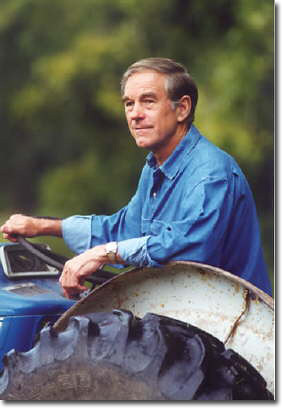
Master Yoda remarked to Obi Wan Kenobi at the end of Empire that "there is another," when all looked hopeless. He was referring, of course, to Princess Leia. Unfortunately, that was a movie, and this is real life. Of all the declared candidates for President, only one is talking about taking the necessary hard steps to restore the value of the dollar and preserve the current American standard of living - Ron Paul - and he does not currently appear to have sufficient name recognition to be able to win it all. I predict, however, that he will show surprising strength that will force the mainstream media to finally pay attention to him as the campaign wears on and the economy worsens.

Normally, I am not an advocate of voting for fringe candidates you agree with who don't have a chance to win on the grounds that you are thereby not only wasting your vote, but actually taking a vote away from the candidate of the two major parties who you dislike least. I am going to make an exception this time because, as mentioned before, America is facing its most serious existential crisis since the Civil War and not one other candidate is addressing the seeds of our coming financial implosion at all. Paul, on the other hand, is speaking directly and clearly about what needs to be done - pull our troops back from their outposts scattered all over the world that we can no longer afford, drastically slash federal taxes, spending, and regulation, and put our currency back on a modified gold standard so it has actual value. The rest of the world is in the process of taking away our national credit cards so there are no other choices available.

Many criticize Paul for his plans to withdraw from Iraq, just as it is becoming clear that our brave soldiers are finally winning the fight against the insurgency (the main indicator that we are winning the battle on the ground is that Iraq reports are vanishing from mainstream media news outlets). The way we achieved victory was to throw more resources and troops at the problem. Unfortunately, $1.8 trillion dollars into the problem, there is no more money to expend on being the policeman for Iraq, or any other country for that matter. Once the troops draw back down to their pre-surge levels, it will be up to the Iraqis to govern themselves - and they don't have a good track record on that score. Try to guess who said the following quotes:

...We rushed into the business with our usual disregard for a comprehensive political scheme. We treated Mesop[otamia] as if it were an isolated unit, instead of which it is part of Arabia.... When people talk of our muddling through it throws me into a passion. Muddle through! why yes, so we do—wading through blood and tears that need never have been shed.

...We are largely suffering from circumstances over which we couldn't have had any control. The wild drive of discontented nationalism...and of discontented Islam...might have proved too much for us however far-seeing we had been; but that doesn't excuse us for having been blind.

No, it wasn't Barrack "Audacity of Hope" Obama (what is supposed to be so audacious about hope anyway?); it was Gertrude Bell, an administrator of the British Mandate in Iraq in the 1920's, which ended about the same way as our try at civilizing Iraq will end soon. Some things never change.

Read all about Congressman Paul's economic ideas in the best of his books. Go, Ron, GO!

The Great Unwinding

I hope everyone loaded up on some gold during the recent buying opportunity mentioned two posts ago. Gold is now headed straight back up again as the dollar continues its freefall. The ongoing appreciation in the Chinese yuan often discussed in this blog also accelerated this week. But today I would like to highlight another great investment opportunity for the immediate future - the unwinding of the yen carry trade and how you can profit from it.

The yen rose against every single one of the world's 16 major traded currencies this week, primarily due to the unwinding of the yen carry trade. What is this "carry trade," and why is its unwinding such a big deal?

Following the collapse of Japanese stock market and real estate bubbles in the early-1990's, Japan's economy sank into a depression that lasted until 2004. The current economic recovery is still tentative, but slowly gaining steam as Japanese trade with China increases by leaps and bounds. During the depression, the Bank of Japan cut interest rates drastically in an attempt to stimulate the economy, and Japan's overnight bank rate of 0.5 percent is now far and away the lowest in the industrialized world. A middle class Japanese worker with a good credit rating can get a housing mortgage loan for 2.75%.

The carry trade developed as a result of the disparity between Japanese interest rates and those of foreign countries such as New Zealand, which awards 8% interest on their government bonds. Literally millions of Japanese housewives in search of greater returns on their savings have marched down to their neighborhood bank and moved their savings into foreign currency accounts denominated in New Zealand dollars, Australian dollars, Canadian dollars, Swiss Francs, and even US dollars, and paying much higher interest rates than a passbook saving account denominated in yen. Foreign hedge funds, investment banks, and even wealthy private investors have gotten into the game as well, borrowing literally billions of dollars at very low interest rates and then investing it overseas in much riskier investments.

This carry trade only works as long as the yen stays relatively stable or decreases in value in relation to other foreign currencies. Japanese housewives know that an increase in the value of the yen by just a few percentage points can wipe out their gains in interest very quickly, so they monitor the exchange rates between the yen and their chosen currency fairly closely. Since Japanese investors tend to move as a group, once the carry trade starts to unwind, that unwinding can accelerate pretty quickly.

The unwinding mechanism works like this: The level of risk begins to increase in the market due to a stock market drawdown somewhere in the world. Foreign currencies accordingly start to fluctuate in value more than usual. That fluctuation in currencies causes some carry trade investors to get nervous and unwind their positions. To do this, they sell their foreign stocks or bonds or withdraw money from their foreign currency denominated savings accounts. Then they transfer that money back to their Japanese bank account. This involves converting their foreign currency back to yen, which causes the demand for (and therefore the value of) the yen to increase, and the value of the currency they are selling to decrease an equal and opposite amount. This rise in the yen's value then causes more investors to unwind their carry trade positions, and a vicious cycle is underway.

How bad can it get? During the market turmoil caused by the Russian government defaulting on its sovereign debt in 1998, the yen soared in value by more than 20% in less than a month, as investors fled from riskier investments. The markets quickly adjusted to that crisis and were rising again smartly just a few months later. This time will be quite different. What is happening now is a massive credit crunch like the late-1980's Savings and Loan crisis, only much worse this time due to the huge numbers of adjustable-rate mortgages that will be resetting throughout the next year, and the literally trillions of dollars of credit derivatives that are based on those loans. The value of the dollar is also dropping like a stone as it slowly but surely loses its status as the world's reserve currency, as discussed in more detail in previous posts.

These two inter-related factors have foreign investors fleeing for the exits, which has precipitated the beginning of the next great carry trade unwind. The yen has gone from above 124 to below 108 so far this year, and is accelerating upward. For the reasons discussed above, this will continue on and off depending on short-term market conditions until the yen finally settles out at at least 80 yen to the dollar and quite possibly beyond that.

What's the best way to play this? All the normal choices discussed in previous posts on the yuan and gold are available. The simplest and safest way would be to convert dollars to yen at a bank, but the interest rates on your yen deposits would be very low, and of course there would be no interest at all if you held your yen in a safe deposit box or in a safe under your bed (don't laugh too quickly - one of the best-selling consumer items in Japan throughout the early-2000's was small household safes). As the number of bank failures in the US starts to increase soon, don't be surprised to see safes gain in popularity. As mentioned in a previous post, your best bet if you go the foreign currency savings account route is Everbank.

Moving along the risk spectrum, the next method is investing in FXY, a currency Exchange Traded Fund (ETF) that matches moves in the yen-dollar rate almost penny by penny. FXY has options available, but only for about nine months into the future. If you choose to buy the options to gain leverage, buy the farthest out month (currently June 2008), and every three months sell those options and buy the new ones three months farther out (this is called "rolling over" or "rolling out" your options). A friend of mine who uses this method bought 23 March 2008 options contracts three months ago and just rolled them over to June 2008. He had a nice profit of $9,600 when he sold the March options. These are the best methods for people who only have a stock brokerage account and don't have futures trading ability yet. See previous posts for more details about ETF's and options on ETF's.

For real leverage, you can use futures contracts and options on those futures contracts. As you know from previous posts, I prefer the options on the futures contracts to the futures contracts themselves, since there is no question the yen will be higher against the dollar at this time next year, but there will likely be radical swings up and down between now and then. Using options instead of the actual futures contracts will keep you from getting stopped out or worse, getting margin calls, during those swings. I'm using the March 2008 9200 strike price options right now, although I don't recommend them for someone buying now as they have moved into the money recently, and out of the money options appreciate faster. Accordingly, I'm going to be rolling them into the June 2008 9500 strike price options soon.

To give you an idea of the effects of leverage, I bought those March options on October 19, 2007, and they are now up 215% each while the yen rate itself is only up about 6% since then. In previous posts I recommended Xpresstrade as the best online broker for do it yourself futures and futures options investing. As an update, at the end of this month, they will complete their merger with optionsXpress and cease to exist. At that point, I recommend switching to optionsXpress as a great one stop shop for all your investment needs. You will be able to trade stocks, bonds, mutual funds, stock options, futures, and futures options all in the same account in a user-friendly interface. I'm not aware of any other broker, online or offline, that offers that trading convenience at anywhere near optionsXpress' commission rates.

Just to round out the total picture, World Currency Options are also traded on the Philadelphia Stock Exchange. These were the original options on currencies, and were once the only way for the small investor to gain leverage on their currency investments. With the introduction of options on futures contracts, currency ETFs, and options on these ETF's, their days are probably numbered, but you can still use them as a way to gain leverage directly on the movements of an underlying currency.

Sunday, November 18, 2007

Options, Options, Options

The market action this week provided a great demonstration of why I mentioned in my last post that options on gold futures contracts were my favorite way to play the ongoing bull market in gold. As gold continues a profit-taking pullback prior to advancing to all-time highs, my margined gold futures contracts and FOREX gold and silver positions were all stopped out, preserving some of my profits, but also meaning that if the market had turned on a dime and shot back the other way, I would have missed out on some of the move up while I was still trying to decide where and when to get back into the market. Because the vast majority of my positions in silver and gold are in options on December 2008 futures contracts, those positions are temporarily down in value, but still in play to benefit from the inevitable turnaround.

This example shows in a nutshell why options are a great choice for investing in commodities that you are sure will move either much higher or much lower in the future, but can't be sure exactly when the big move or moves will occur. As discussed in previous posts, since you pay for an option in full up front, your loss is limited to your initial investment if it expires worthless, and that can only happen if you fail to roll it over prior to its expiration date. On the other hand, since futures contracts and FOREX positions are heavily margined, investors have to close them out quickly when the market starts moving against their positions, as happened to my margined positions this week. Futures and FOREX traders who do not do so quickly become former traders.

So why does anyone trade margined positions then? Why doesn't everyone just trade options? The answer is that since you pay the full value of the option at the time you establish a position, you can't control as large of a total position size as you could in the futures, since you only have to make a small "deposit" when you establish a position in a futures contract, as discussed in more detail in previous posts. Like everywhere else in the market, taking greater risk creates the possibility of greater returns.

Options on stocks and Exchange Traded Funds (ETF's) were discussed in detail in my November 8, 2007 post. The main difference between options on stocks and options on futures is that a futures option gives you the right to buy or sell one futures contract at a set price at a set future date, instead of 100 shares of an underlying stock. Other than that difference, the underlying concept is basically the same. A speculator looking for the maximum leverage would purchase a futures contract on a given commodity, and would consequently assume the risk of greater losses than his or her initial investment if their margined position moved against them far enough before they closed it out. A speculator looking for high leverage, but also looking to avoid margin calls, would instead purchase options on a futures contract.

Let's look specifically at some examples for each method. As of this writing, with gold trading at $787 per troy ounce, a speculator with $10,000 could choose to control two full size 100 troy ounce gold futures contracts (leaving a $1,900 cash cushion), or 10 e-mini 33.2 troy ounce gold futures contracts (leaving a $2,300 cash cushion). The speculator could also choose to buy two call options that would give him or her the right to purchase two full size 100 troy ounce gold futures contracts at a price of $800 per troy ounce on November 20, 2008 (leaving a $180 cash balance). If the price of gold moved from $787 to $887 per troy ounce sometime in that period and the speculator decided to take profits at that point, the respective profits would be $20,000 for the two full size contract choice, $33,200 for the 10 e-mini contract choice, and $12,700 for the two call options.

The $12,700 profit on the call options represents a gain of just under 160%, but was achieved without having to worry about margin calls or getting stopped out of the position at a loss. True to the concept of greater risk taking opening up the possibility of greater gains, the margined futures contract positions were up 247% and 431%, respectively, but if at any time following the opening of the position the price of gold had gone down by just $4 to $783, the futures contract holders would have received margin calls asking them to deposit more money, at which point most futures traders would have closed out their positions. There is also the ongoing mental stress associated with holding heavily margined positions to consider.

Options on futures should only be considered by a speculator who has a very firm view of the future direction of a particular commodities market, as options can expire worthless if they are not rolled over. So the obvious question at this point in time is whether or not gold is certain to move significantly higher in the next few years. Since nothing is certain in this world except for death and taxes, a better question is what it would take for gold NOT to move significantly higher. The only scenario that derails the ongoing gold bull market is one in which: (1) the Fed embarks on an aggresive campaign to raise interest rates to protect the dollar, thereby throwing millions more homeowners out on the street than are headed out on the street already; and (2) the politicians in Washington embark on an aggressive campaign to cut federal spending on defense, Social Security, Medicare, etc. enough to generate huge annual budget surpluses for at least the next generation. Each speculator or investor will have to make up their own mind as to whether or not they see the above scenario coming to fruition anytime soon.